🚀 Quick Start
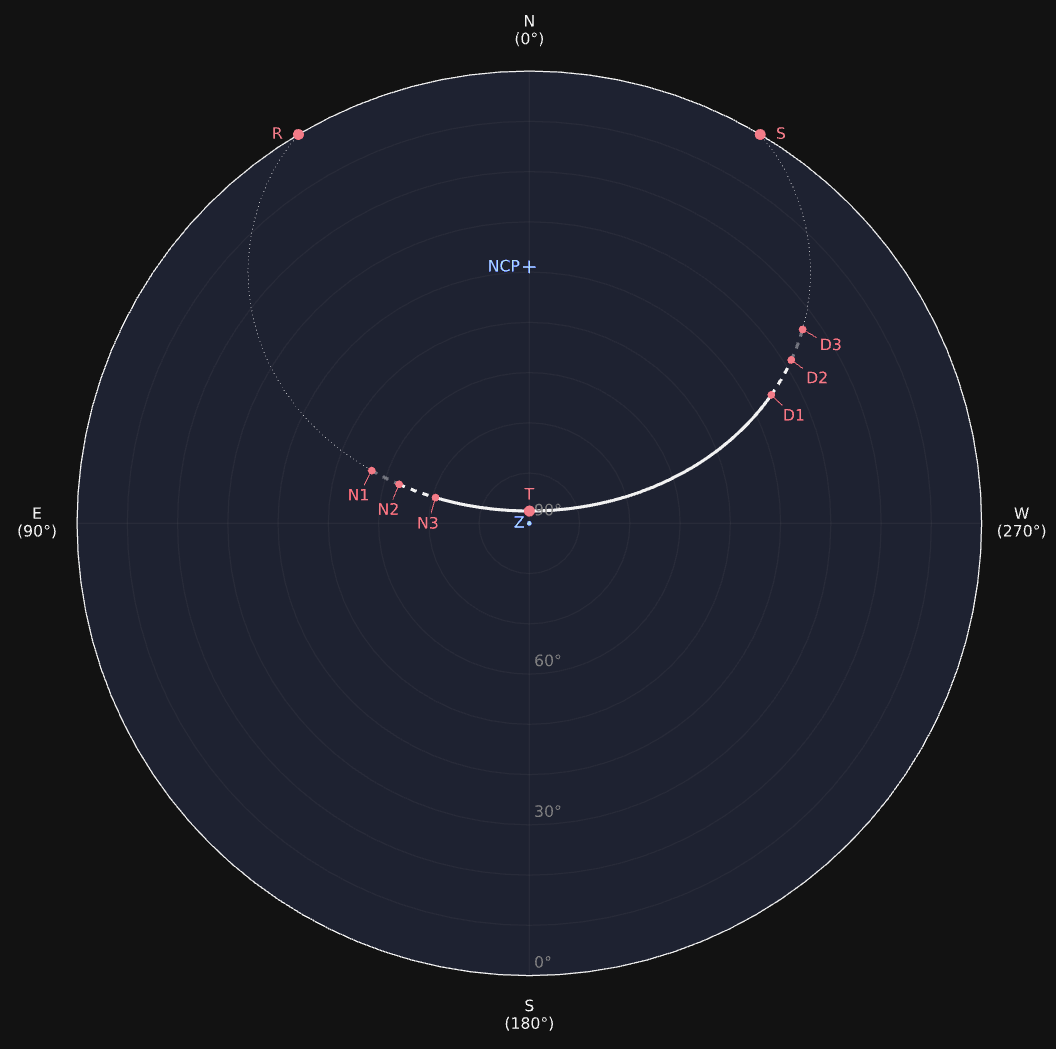
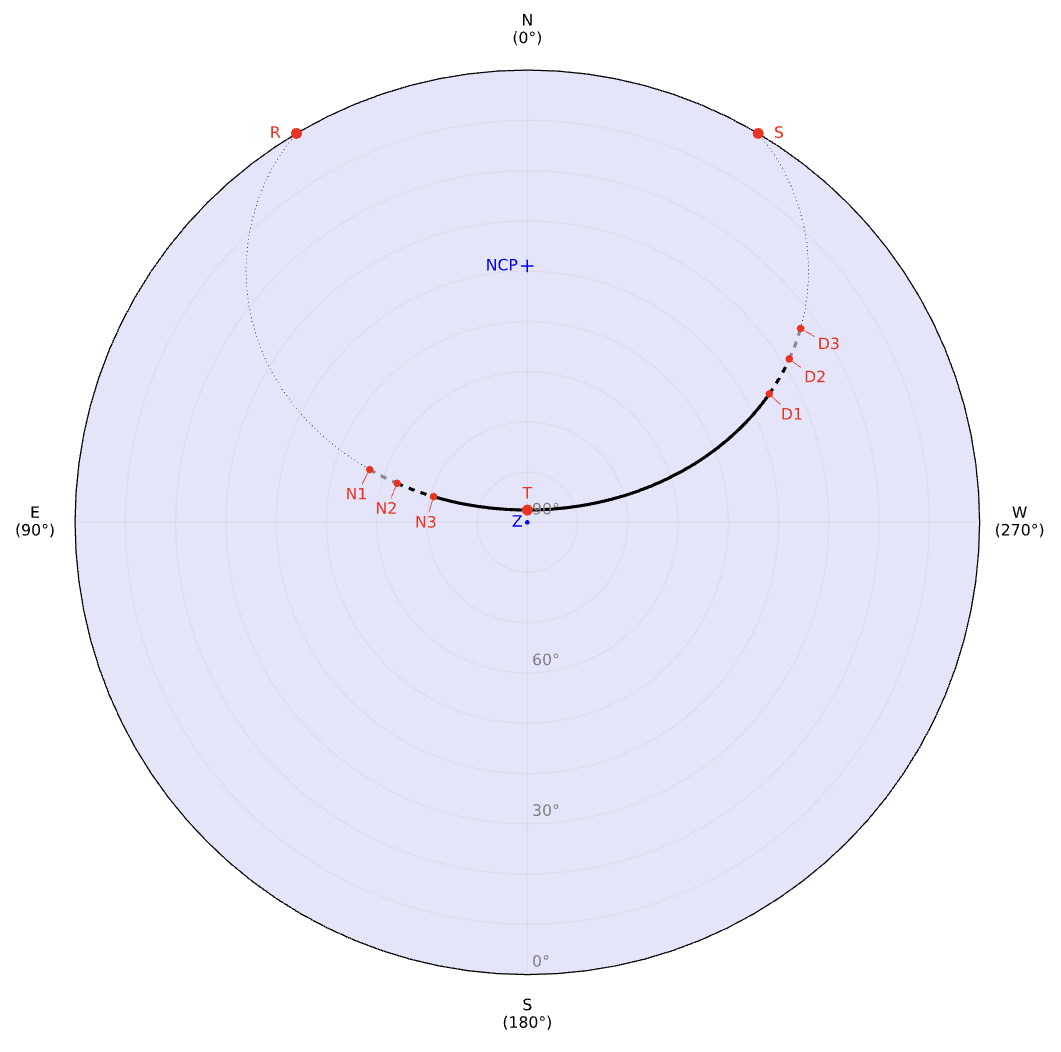
Star Path Viewer computes a planet or star’s positions on the celestial sphere based on input. It generates a diagram with a curved path representing the apparent motion projected onto the observer’s local horizontal coordinate system. A table of the rising/setting/transit/twilight times and star positions will also be appended.
Step 1. To make a request, please provide the LOCATION, LOCAL DATE, and CELESTIAL OBJECT.
Step 2. Click the DRAW STAR PATH button to submit the request. The results will be displayed below this button.
💡 What is the latitude/longitude of this location? → Search address
💡 When are the equinoxes/solstices of this year? → Equinoxes/solstices
💡 What is the name / Hipparcos Catalogue number of this star? → Search name/HIP
💡 What is the Chinese name of this star? → Search Chinese name
💡 When will it get dark enough to observe the aurora borealis / meteor shower tonight? → Check sunset and twilight times
💡 How should I schedule my astrophotography? → Check twilight times
✨ Highlights
Covers a wide range of querying dates from 3001 BCE to 3000 CE.
Powered by authoritative data sources and scientific libraries.
Depicts a complete star path across the sky during a day with explicit annotations.
Marks a star’s rising/setting/transit times and its positions during twilights.
Supports Gregorian and Julian calendars. Displays available Chinese calender.
Offers queries for equinoxes and solstices given a year and a location.